Upper 3 Visit Norwich Cathedral and the East Anglian Bangladeshi Mosque

February 12, 2025

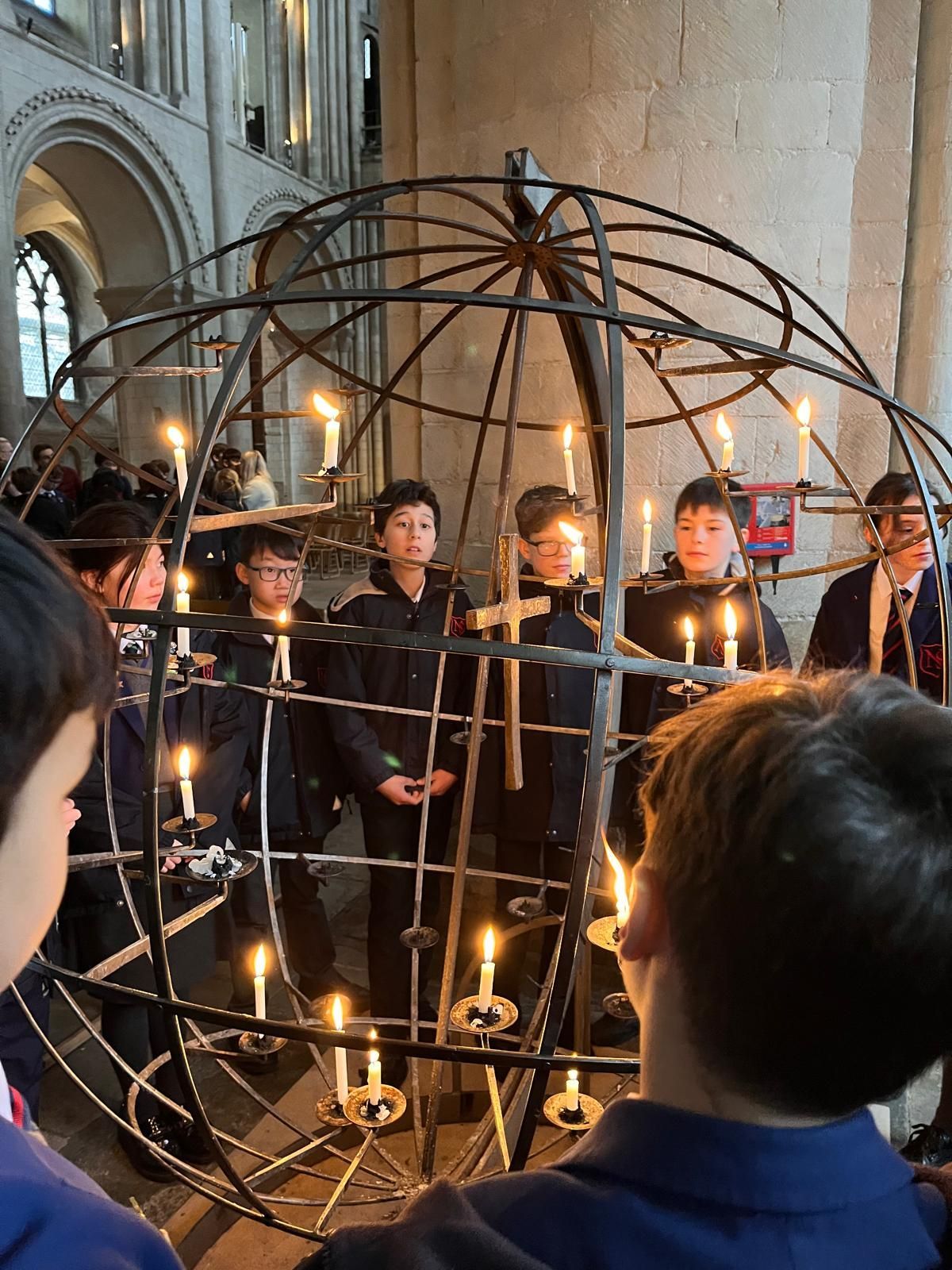
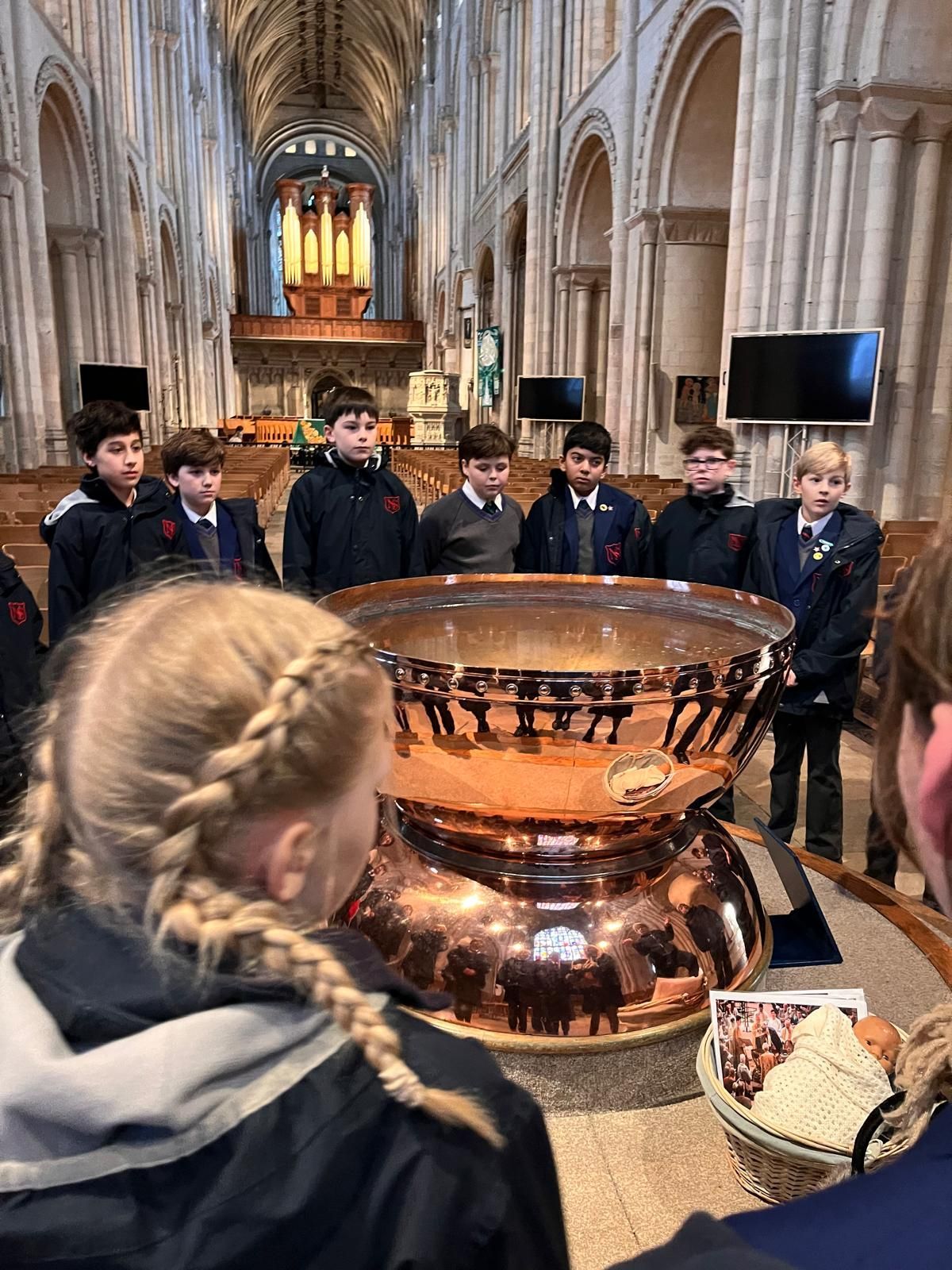
Upper 3 had a fascinating opportunity to explore two different places of worship, deepening their understanding of both Christianity and Islam. Their visit began at Norwich Cathedral, where they examined key features of a Christian church, such as the font, the pulpit, and the altar. Pupils also reflected on the significance of the cross in Christian belief and worship.


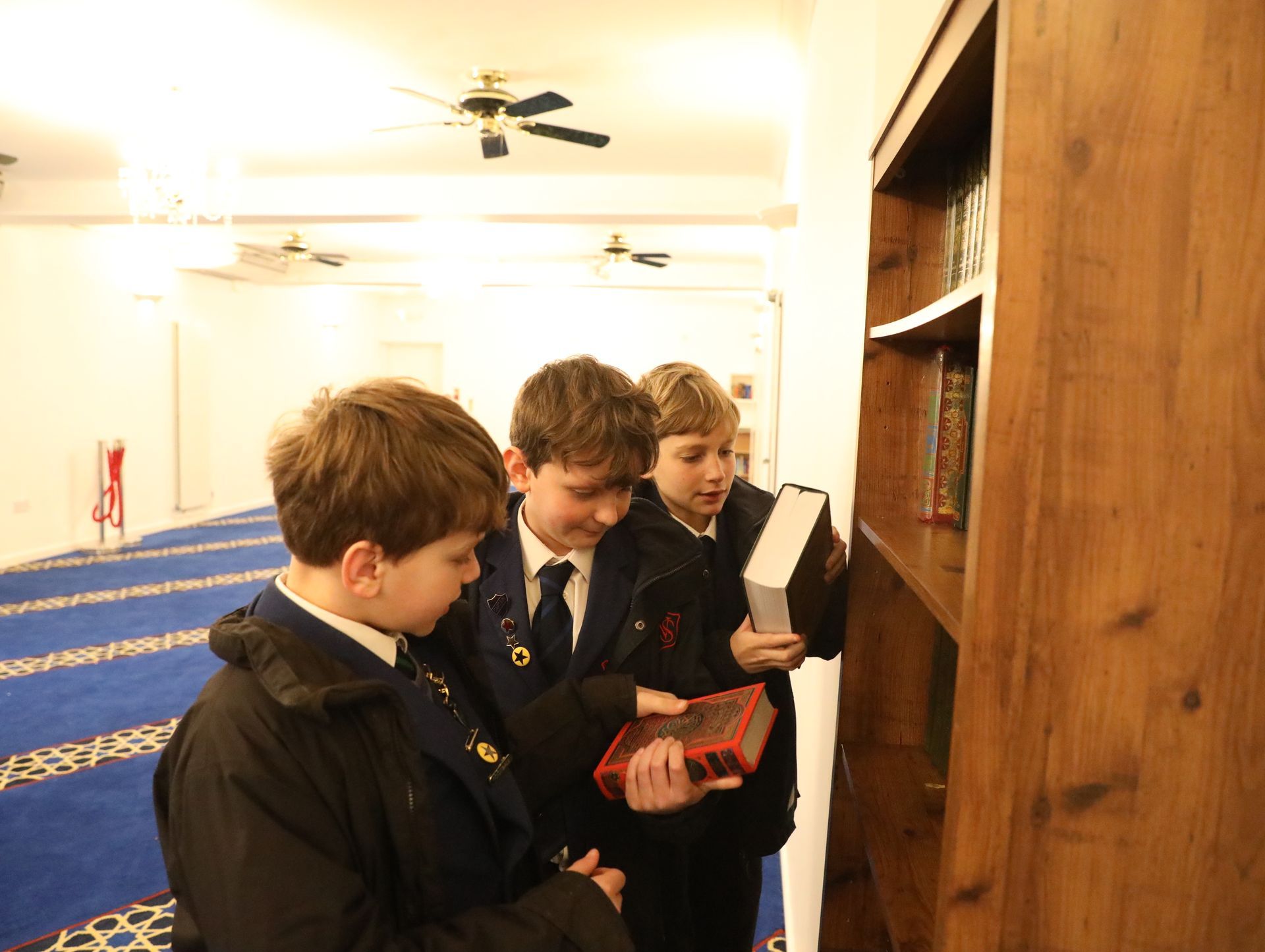
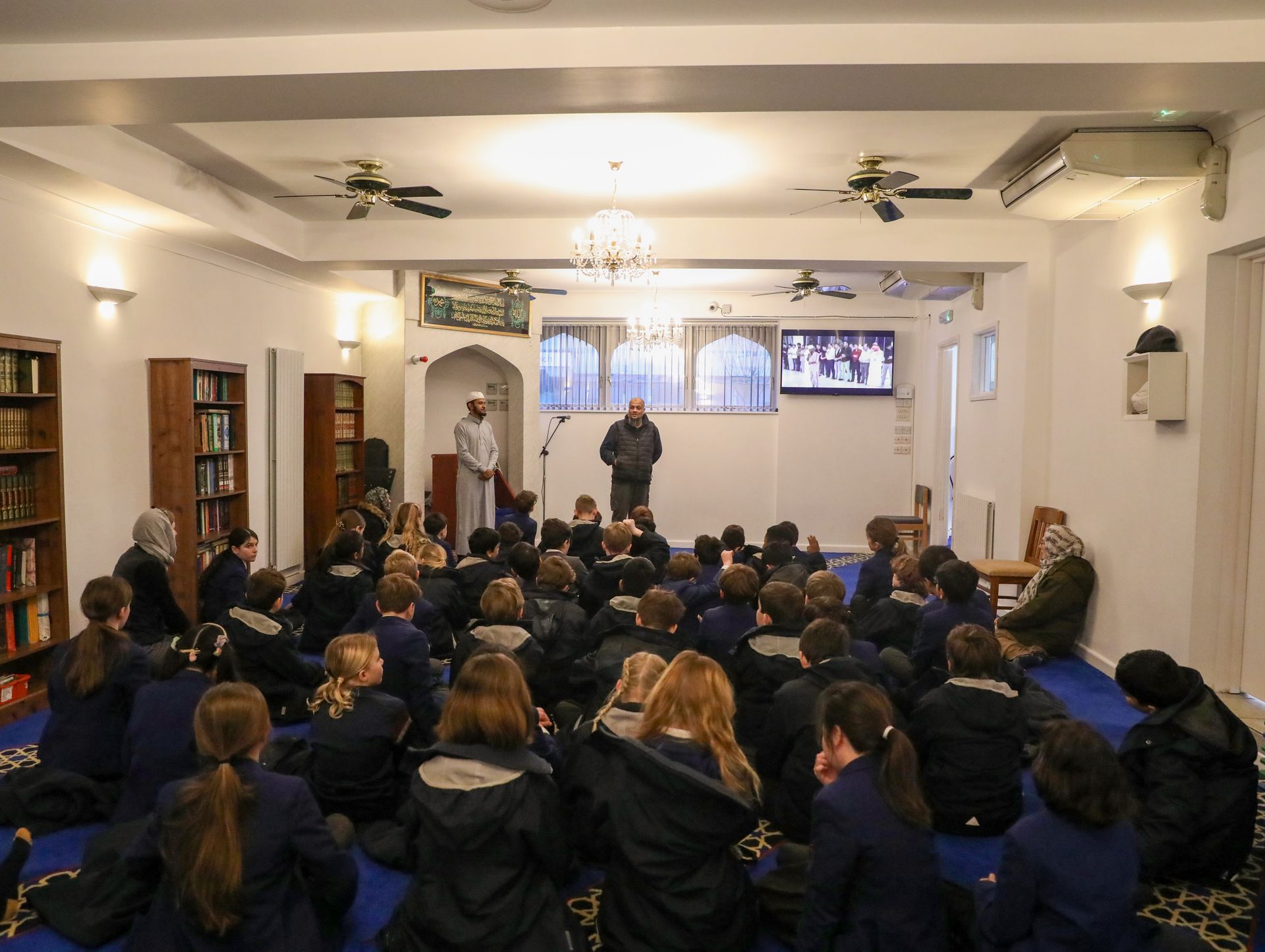
After their time in the cathedral, they visited the East Anglian Bangladeshi Mosque on Rose Lane. During their hour-long visit, they engaged in a talk and question session with Hussein, learning about Islamic practices and beliefs. They were also able to try out different prayer positions and gained insight into the significance of the Kaaba during the pilgrimage of Hajj.


Following their visit to the mosque, pupils returned to the cathedral for follow-up activities and a period of reflection. They discussed the similarities and differences between the two places of worship, considering how faith is expressed in different traditions.


This enriching experience gave pupils a valuable opportunity to explore interfaith connections, ask thoughtful questions, and develop a deeper appreciation for religious diversity.


Coco said, ‘I learned that Muslims pray five times a day, and I loved practising the prayer positions.’

Neil said ‘In the cathedral I learned that the bishop’s throne is called the cathedra. It is a raised chair which the bishop sits on when he is being enthroned.’


Felix commented ‘Both buildings were very fun, and I immensely enjoyed the trip. I hope that I can do it again.’


Evie reported ‘I enjoyed looking at the stained-glass windows and lying down on the floor to look at the detailed roof bosses in the Cathedral.’


By Eleanor Lewis May 20, 2026
Under gloriously blue skies, the Norwich Cathedral Close became the backdrop for a truly special moment in the history of Norwich School. On 21 April, pupils, teachers and support staff gathered together for a whole-school photograph — a milestone occasion that captured far more than a single image. This year marks the first time our pupil community has spanned the full educational journey, from our youngest learners aged just three years old through to our Upper 6 pupils, who are now on study leave as they conclude their final term at Norwich School. Bringing every year group together in one photograph was both symbolic and deeply meaningful: a celebration of continuity, growth and belonging across every stage of school life. Standing side by side in the heart of Norwich Cathedral Close, pupils aged 3 to 18 reflected the vibrant and diverse community that defines our school. Alongside them stood the teachers and support staff whose dedication, encouragement and care shape daily life across the school. The result was a portrait of a thriving community united by shared values and a collective sense of purpose. Moments like this remind us what makes Norwich School so distinctive. We are large enough to offer a breadth of opportunity, ambition and experience, yet small enough for every pupil to be known, valued and supported as an individual. From the very first days in our youngest years to the final steps towards university and beyond, each pupil’s journey is recognised and celebrated. As our Upper 6 pupils prepare for the next chapter of their lives, today’s photograph also served as a reminder of the connections and memories that will remain long after they leave the Close. For our youngest pupils, it was a glimpse into the exciting journey that lies ahead. And for everyone gathered together, it was a powerful expression of community. SDAG QUOTE : JI QUOTE: One school. Many voices. Everyone belonging.
By Eleanor Lewis May 20, 2026
One day, someone was walking down the street when they fell in a hole. The walls are so steep they can't get out. A doctor passes by and the guy shouts up, 'Hey you. Can you help me out?' The doctor writes a prescription, throws it down in the hole and moves on. Then a priest comes along and the guy shouts up, 'Father, I'm down in this hole can you help me out?' The priest writes out a prayer, throws it down in the hole and moves on. Next, a teacher comes along and the guy shouts up, ‘Miss, I’ve been stuck here so long, can you help me out?’ The teacher gives a quick lecture on how to get out of the hole and moves on. Then a friend walks by, 'Hey, Joe, it's me can you help me out?' And the friend jumps in the hole. Our guy says, 'Are you stupid? Now we're both down here.' The friend says, 'Yes, but I've been down here before and I know the way out.” Character triumphs over talent. The concept of friendship appears simple on the surface, they’re just our ‘friends’. But what makes a good friend is hard to define and easy to debate. It’s something human beings have been pondering over not just for centuries but for millennia. Aristotle outlined three kinds of friendship: a friendship of utility, a friendship of pleasure and a friendship of virtue. For the first two, both these types of friendship are dependent on a particular good or pleasure, take that away and the friendship crumbles. Friendships that are built upon virtue take time and energy on both sides , but they last. Wind the clock forward a couple of thousand years and psychological studies often reveal that the most sought-after trait in a friend is ‘honesty’. People are looking for someone in their lives who is there to co-operate and support, however, this would not be possible if a friend is dishonest, unreliable, and exploitive. Yes, we seek other qualities in a person such as kindness, availability and just generally being pleasant to be around, but to a large degree, these are objective. Instead, I encourage you to reflect on what your moral values are and see which ones you share with those around you; you might just find a friend. These moral values are fixed in their nature, but dependable and flexible on the context. For instance, I value people who are good fun to be around and positive in their outlook on everyday life. However, we cannot be this way all the time, life throws up challenges, holes in the street… and at those moments I need that same person to just as easily be empathetic and understanding. Likewise, if you value loyalty in a friend, someone who will be by your side no matter what, then I would also encourage you to allow that same person to challenge you & for you to challenge them. Friendships need to offer us some resistance when our behaviour doesn’t match our shared, unwritten values. These should not be seen as contradictions, merely the importance of adaptability whilst protecting the core strength of our support network. Recently, a friend reached out to me after a period of little contact, asking how I was. I explained I was finding things tough, overwhelming, scary. The very next evening, he and two other friends were on a train to come and see me. To listen, to support, to give me some small respite from a darkening world. Simply being present was a small act that went a long way to helping me out of a hole. So, the next time you find yourself unfortunate enough to be walking down a street and you fall into a hole, hopefully you can be reassured that you won’t be down there alone or for too long.
By Eleanor Lewis May 20, 2026
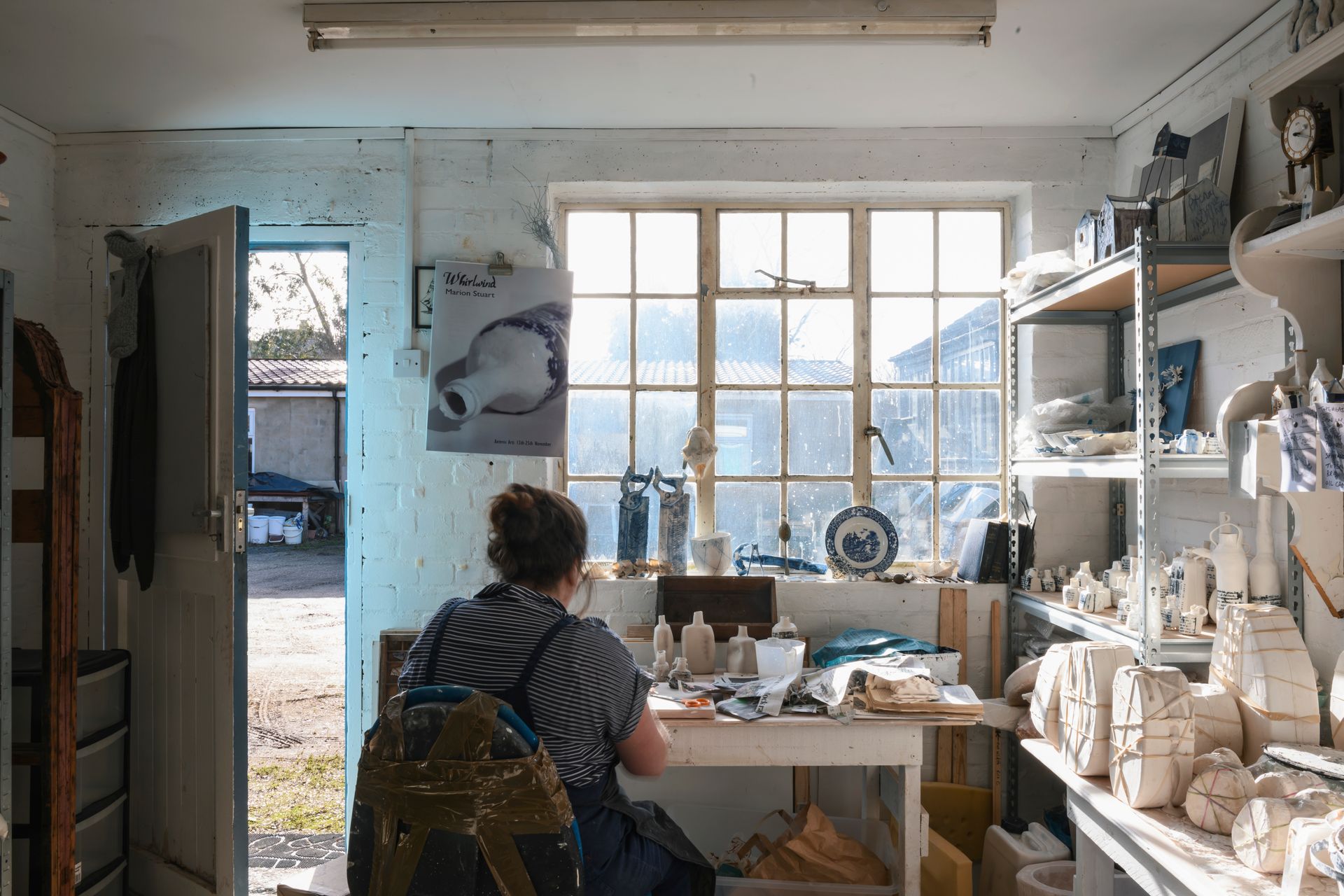
Statement I have realised during the last few years that there is a thread that runs through all my work which is the idea of containment. Houses, harbours and boats are all containers in different ways and many of Hepworth’s sculptures have elements of containment too. I moved to Cornwall from Norwich in 1982 and this had a profound influence on my work. Although I returned to Norwich in 1987, Cornwall has always remained my spiritual home and the catalyst for my ideas, particularly the harbours of St. Ives, Mousehole and Falmouth. An additional major influence has been a long series of drawings done in Barbara Hepworth’s garden and studio, as well as the works of Paul Feiler and Terry Frost. Integrated in to some of the works are elements of Cubism and Chinese perspective as a method of structuring images. My major concern is with composition and colour, and using colour to open up the space on a 2D surface. Sometimes collage is used as a starting point which determines what the composition might be, although this is always subject to change. The collage elements also act as parts of the real world juxtaposed with the suggested applications of paint. Some works have other Cornish images such as tin mine chimneys, segments of Hepworth’s sculptures, parts of fishing boats and glimpses of sea, beach and sky. These are not abstract works – they are abstracted – all the works start with observational drawing. The challenge with my work is to bring these elements together to produce a strong composition that works visually in terms of different relationships as well as an image that evokes a sense of place and meaning – something that can communicate before it is fully understood. Just as a fisherman is ‘caught’ by the fish, I am continually drawn back to certain places and images. Mousehole harbour with its solid granite walls containing and protecting the small boats from the ravages of the sea is like a womb. The V shape entrance/exit to the harbour is anatomically feminine too and relates to Hepworth’s sculpture ‘Divided Form’ which has been a source of many works.
By Eleanor Lewis May 19, 2026
Lower 2 enjoyed an inspiring and energetic “Play in a Day” workshop at the Theatre Royal, where they brought Ted Hughes’ The Iron Man vividly to life on stage. Building on their Michaelmas reading, pupils explored how drama can transform words on a page into a dynamic and engaging performance. Throughout the day, they experimented with expressive movement, physical theatre, and a wide range of vocal techniques, learning how posture, gesture, pace, tone, and volume can shape character and atmosphere. Working collaboratively in small groups, the pupils developed scenes from the novel, thinking carefully about how to convey tension, humour, and emotion to an audience. They embraced every challenge with enthusiasm and imagination, showing increasing confidence as performers while also strengthening their communication and teamwork skills. The workshop encouraged them to take creative risks, support one another, and respond thoughtfully to the dramatic ideas of their peers. The day culminated in a lively and imaginative sharing for parents and guardians, who were delighted to see the pupils’ creativity, energy, and growing stage presence. From powerful narration to inventive staging and expressive ensemble work, the performances reflected not only the pupils’ understanding of the text, but also their willingness to collaborate and experiment. It was a memorable and rewarding experience that highlighted the creativity, confidence, and teamwork flourishing within Lower 2.
By Sonja Mitchell May 19, 2026
With funding from Friends of Norwich School, BlazePods are proving invaluable with sports participation and engagement
By Eleanor Lewis May 15, 2026
At the Home of Martha and Mary – Luke 10:38-42 As Jesus and his disciples were on their way, he came to a village where a woman named Martha opened her home to him. She had a sister called Mary, who sat at the Lord’s feet listening to what he said. But Martha was distracted by all the preparations that had to be made. She came to him and asked, “Lord, don’t you care that my sister has left me to do the work by myself? Tell her to help me!” “Martha, Martha,” the Lord answered, “you are worried and upset about many things, but few things are needed—or indeed only one. Mary has chosen what is better, and it will not be taken away from her.” Many of you will know the story of the Tortoise and the Hare - the one where the hare dashes off at the start of the race and finds himself so far ahead that he reckons he has time for a quick nap under a tree. When he awakes, he sees the slow but steady tortoise crossing the finish line ahead of him. A classic fable about two different approaches – the hare-brain versus the measured mind. Buddhist tradition uses a different animal to describe a similar thing. ‘Monkey mind’ is a way of describing that feeling when we’re rushing so that our attention won’t settle on anything. That state of mind is a bit like a monkey jumping around all over the place. The opposite of the monkey mind is the monk mind. As the name suggests, this is the state of mindfulness that monks cultivate as they prepare for meditation. It is a deliberate calming of the thoughts, so that instead of jumping around, everything is centred and focused. People who practice meditation, both in Buddhism and in other traditions, will tell you that this is hard at first, but it’s a skill that can be learned. The equivalent story in the Christian tradition is the one we heard just now – the story of Mary and Martha. It’s a little surprising when you first hear it; after all, Martha appears to be working hard, while Mary is just sitting around doing – apparently – nothing. And yet at the end of the story, it’s Martha that Jesus gently rebukes. “Martha, Martha, you are worried and upset about many things…” Again, the story gives us two opposites. Martha is suffering from monkey mind – she is being hare-brained as she dashes round the kitchen, trying to pull everyone else into her maelstrom. Mary is doing something different – but she is doing something. For one thing, she is being deliberately still. She has found her place of quiet at the feet of her Rabbi. And for another thing, she is listening. The Bible tells us elsewhere that Jesus has the words of eternal life; Mary is paying attention to those words. Measured Mary is using her monk mind. The Trinity term can be a busy one. There’s lots to do – much of it very positive. Cricket, tennis, athletics – all those things you can do outside when the weather warms up. Drama, dance, music – all culminating in a live stage performance on the Lower Close in July. The academic year reaches its crescendo and its conclusion. At the moment we’re all aware of some end-of-year assessments coming up. In an atmosphere like this, you might think that we’d all go a bit hare-brained. Maybe we do a bit, sometimes – although actually we don’t always, which suggests that between us we might have learned a few self-calming skills already. All the same, I think the example of the tortoise, the monk and Mary bears repeating at this pacey stage of term. If we find ourselves becoming ‘worried and upset about many things’, try and remember that things are not what’s most important in life. God and other people are what’s ultimately important, Jesus suggests: ‘Few things are needed – or indeed only one.’ We concluded our assembly with a minute of simply sitting quietly, followed by this prayer: Lord God, you hold both heaven and earth in a single peace. Give peace among the nations, peace in our homes, and peace in our hearts. Amen.
By Eleanor Lewis May 14, 2026
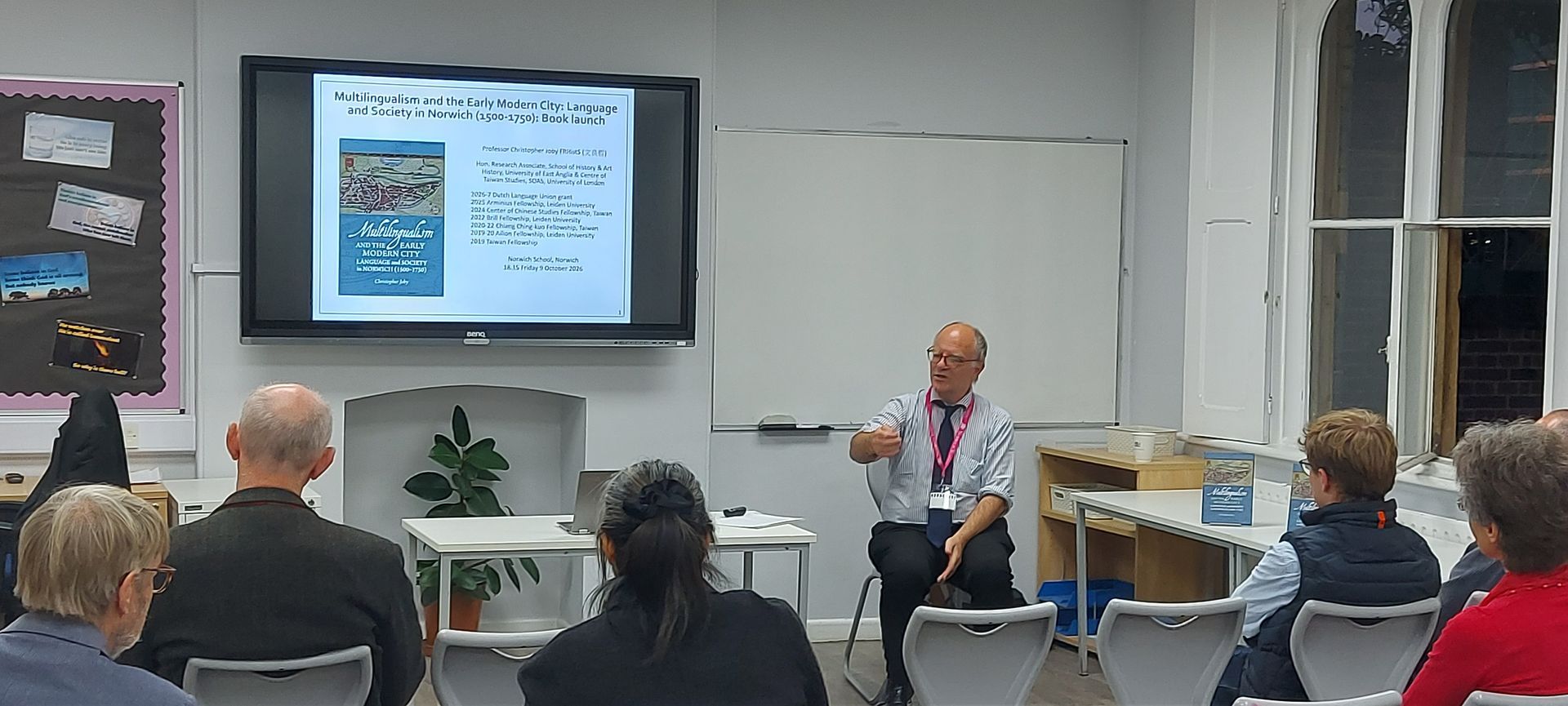
Norwich School has enjoyed a treasured relationship with the highly respected Norfolk Cambridge Society, and we have played a key role hosting their 26-lecture series on site. The latest Norfolk Cambridge Society public lecture took place at Norwich School on 14 May 2026, delivered by Professor Robin Franklin, FRS, Honorary Professor of Stem Cell Biology at the University of Cambridge. He is a leading stem cell scientist and multi-award-winning regeneration biologist. Professor Franklin's topic was Brains, Stem Cells and Growing Old - Reversing the Ravages of Time, in which he discussed neuro-degenerative diseases and how brain cells are progressively lost as we grow older - a major factor in age-related cognitive decline. Before the 1980s, scientists understood that the brain could not regenerate, as it lacked the stem cells required for the production of new cells. Coherently and with great humour, Professor Franklin explained why he believes that future developments in this field are hugely promising, being at the forefront of scientific innovation that he and his team at Cambridge University are working on. It was a beautifully illustrated lecture and a masterclass in clarity and intellectual stimulation. There was not a free seat in the house. A very interesting Q&A discussion was led by acclaimed local neurology researcher and leading authority on Multiple Sclerosis, Professor Charles ffrench-Constant, who had worked with Professor Franklin. Discussions continued during drinks in the refectory afterwards. The Norfolk Cambridge Society has a simply stellar line-up of future talks ahead, with the next one taking place on 17 September 2026: " A Conversation with Ed Balls " - an interview with TV personality and former high-ranking politician Ed Balls in conversation with Phil Webster, former Political Editor of The Times. Tickets available : HERE . All are welcome. Our thanks go to the dynamic NCS for putting on such a compelling series of talks. Finally, please have a flick through our publication: At Close Quarters Trinity Term 2026 to see our full programme of exciting, cultural events taking place in and around Cathedral Close this term.
By Eleanor Lewis May 14, 2026
Winning gold at the Cheerleading Worlds is something most athletes only dream of, but for Tilly G and her teammates at Unity Allstars Flame, that dream became reality through hard work, dedication, and sacrifice. Tilly is part of Unity Allstars Flame, an all-girl under-18 team that became World Champions in their very first year as a Cheerleading Worlds team. Their achievement is even more impressive because many teams spend years trying to qualify for the Cheerleading Worlds, let alone win gold. Over the past year, Tilly has shown huge commitment to cheerleading. Since joining Unity Allstars, she and her family have travelled around three hours each way to training twice a week. This meant long nights travelling home, balancing schoolwork alongside training, and giving up so much of her free time to follow her passion. Cheerleading at this level requires strength, teamwork, trust, and determination. Athletes spend hours perfecting routines, stunts, tumbling, and dance sections, all while learning to perform under pressure. Despite the challenges, Tilly continued to work hard and support her team every step of the way. As a first-year Cheerleading Worlds team, Flame exceeded expectations throughout the competition. On day one, the team suffered a minor fall during their routine, resulting in deductions to their score. Despite this, they still finished the day in 1st place and qualified for day two. Determined to prove themselves, Flame returned to the floor on day two with confidence and absolutely smashed the routine, the atmosphere in the area was amazing , they delivered a powerful, clean routine with zero deductions. Their outstanding performance secured them the title of World Champions, winning their division by an incredible 10-point margin and bringing home the gold medal. Something that Tilly will remember for the rest of her life. Her journey shows that success comes from perseverance, commitment, and believing in yourself. Behind the gold medal are months of sacrifice, hard work, and determination, making this achievement even more special.
By Eleanor Lewis May 14, 2026
Our Lower One and Upper One pupils delighted audiences with two wonderful performances of The Bee Musical in The Blake Studio. The children proudly took to the stage for a special morning performance for our friends at The Great Hospital, followed by an afternoon performance for parents and families. It was a real joy to showcase the performing arts talents of some of our youngest pupils. Over the few weeks, the children have worked incredibly hard learning their songs and lines, while growing in confidence through drama, comedy and character performance. Their enthusiasm and commitment shone through in every scene, and it was clear just how much they had enjoyed bringing this lively production to life. The show featured some fantastic performances, with many of the children delivering their roles with confidence, expression and excellent comic timing. The audience was thoroughly entertained by the uplifting musical numbers, including the catchy Bee Bop , the energetic Bees Knees and the unforgettable Honey Honey Honey Bee Mine . Mrs Barclay praised the children for their wonderful performances and dedication throughout the rehearsal process, reflecting on what a special experience the production has been for everyone involved. She commented, “The children have loved every part of this journey, from learning their songs and lines to performing so confidently on stage and working together to create such a fun and polished production. I have been so impressed by the confidence, teamwork and enthusiasm shown by every pupil. These performances were a true reflection of all their hard work and of just how much they have enjoyed being part of this very special show.”
By Sonja Mitchell May 14, 2026
FONS has supported Dance Competitions to great success!
More Posts