NEURODIVERSITY CHAMPIONS AT NORWICH SCHOOL - BETSY JAMES

March 17, 2023

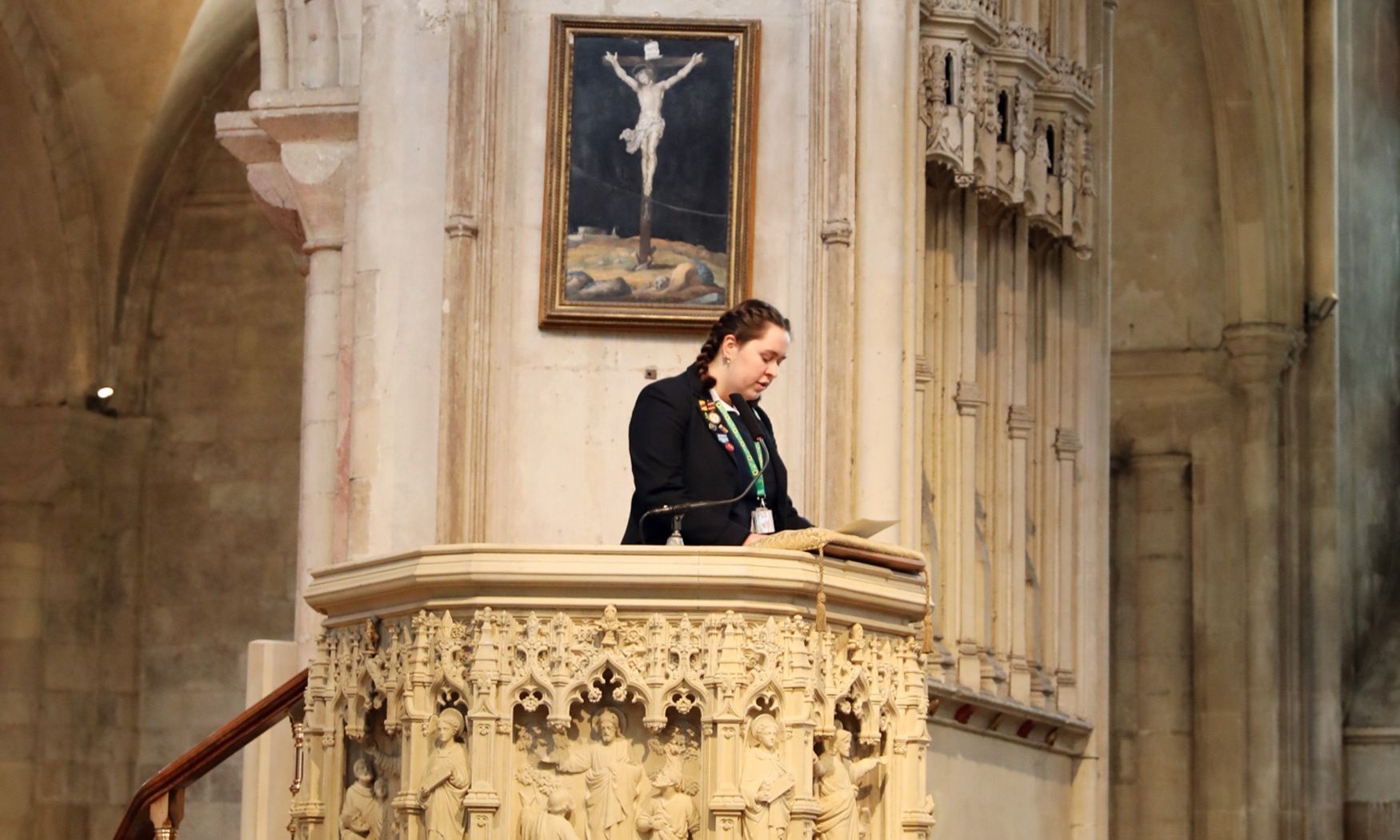
As a part of Norwich School’s support of Neurodiversity Celebration Week, the neurodiversity group are interviewing Neurodiversity Champions at Norwich School and our final Champion of the week is Upper Sixth pupil, Betsy James.

Betsy, along with Anna Clayton, spoke at a special assembly this week to mark Neurodiversity Celebration Week. Presented below is a transcript of Betsy's wonderful address to the assembly.


The dictionary definition for neurodiversity is as follows: ‘the range of differences in individual brain function and behavioural traits, regarded as part of normal variation in the human population’ and while this is all well and good, it doesn’t make the subject itself very approachable. Calling neurodiverse conditions “out of the ordinary” doesn’t sound good either, as it suggests that there is something wrong with the brain if it functions just a tad bit differently to someone else’s. I prefer to think of neurodiversity as the diverse ways in which the brain can work and interpret information.’ This definition was coined by Judy Singer, an autistic sociologist in 1997.


The term neurodiversity is not easily pinned down as it encompasses a wide range of different diagnosis: ADHD, Autism, Dyspraxia, Dyslexia, Dyscalculia, Dysgraphia, and Tourette's syndrome. While these conditions may feel a million miles away to most of you, it’s important to celebrate neurodiversity because it increases inclusion; no one likes the feeling of being left out, especially when it’s because of something that cannot be changed, and Neurodiversity Celebration Week aims to spread the worldwide acceptance of neurodiversity. If you are not neurodiverse yourself, the experiences of those that are may feel entirely separate from your own; you might, for example, still be able to focus on a maths lesson even if you become aware of your sock being twisted in your shoe, but I promise you it is extremely easy to accommodate for those who are.


Talking and listening to neurodiverse people is key; listening to needs and wants is a really easy way to make those around you feel seen, and asking what simple accommodations or shifts could be made to make the day easier, whether that be lowering your speaking volume, finding a quiet and empty place to sit or getting someone a blanket so they feel safe, are massively impactful. These small acts may seem inconsequential and entirely meaningless to you, but for someone who needs that 5-minute breather, or the feeling of a blanket wrapped around their shoulders, it can make a world of difference.


I was diagnosed with autism in June of 2022 and growing up as autistic but without knowing it lent itself to some pretty interesting situations. Apparently, it isn’t the most usual response to cover your ears when you’re afraid of something, even if what you’re scared of isn’t making a noise. It also isn’t “normal” to have a panic attack at the age of 15 when you wake up in the middle of the night and discover your teddies have fallen out of your bed while you were sleeping. That, however, is MY normal. Being diagnosed late meant that my close friends came to understand my autism at the same time as I did, and we have learned together how to work around my different needs. I cannot express how much the support and love from my friends has meant to me over the past year; helping me calm down during anxiety attacks – perhaps randomly prompted because I suddenly feel my nails are a bit too long - or entertaining my manic ramblings about my new obsession, whatever that might be.


I’ve never felt ostracised or excluded because of my autism and I know that that is an extremely privileged position to be in. Having a close support group that cushions and loves me when everyday life becomes a bit overwhelming is something that quite a lot of neurodiverse people don’t have and can’t even imagine having. Just being more understanding and asking what your neurodiverse friends need from you is an easy way to be a great friend. Neurodiversity doesn’t make people weird; it doesn’t make them annoying, and it shouldn’t alienate them from their peer group. It is simply a set of quirks and different needs that must be met; just like one person might know every Arsenal match score since 1996 and someone else might know the lore behind the entire Five Night’s at Freddy’s Franchise. Accepting and celebrating everyone’s differences and quirks is a much nicer alternative to labelling them abnormal.


In terms of everyday life, my everyday routines are essential to my wellbeing. Any slight shifts in my plans, whether that be the knowledge that I have to take public transport without mentally preparing myself for it first, or having a meeting that I didn’t know was happening and which gets in the way of the hour of reading I had scheduled in my brain, can really throw me off.


I’m slowly learning to accept that occasionally small changes to my plans will happen, but it can be extremely hard to cope with and always completely exhausts me. Small things like that, along with other external stimuli, like noises, touch, smells, and the knowledge that I can’t plan for every possible outcome of the day, can make it seem like I don’t like being autistic. Don’t get me wrong, it is hard and sometimes frightening, but I love being autistic; the way my brain works is so unique, and I wouldn’t change it for the world. It is integral to what makes me, me. If I was neurotypical (which is what you are if you don’t fall into a category of neurodiversity), I wouldn’t be the same person. I wouldn’t forget the simplest of things, I wouldn’t ramble on and on about something that you don’t really care about, but I also wouldn’t have my obsessive passion for books, the heightened empathy I feel for others, a total ease with being on stage delivering a well-rehearsed line, and I wouldn’t know how to create a safe space for me and those around me. In short, being autistic is part of who I am; it isn’t the only defining feature, but it’s a pretty important one and I wouldn’t have it any other way.


Even if you’ve been bored out of your mind and haven’t been listening, have been thinking ‘this doesn’t apply to me’ or will joke about this assembly later with your friends, I hope this assembly has made you think. I hope you come away understanding that neurodiversity is an approachable topic; it isn’t something to fear and conversations with those that are neurodiverse are essential to making the world a safer and more comfortable place. Let’s celebrate everyone for who they are.

Thank you for listening.


Photo credits: Finn Pond - Close Up

By Eleanor Lewis April 1, 2026
This week we are spotlighting STEMM at Norwich School and caught up with some inspiring ON’s who discussed where studying a STEMM subject at the school has taken them in their careers! Wian Stipp – (11-18) Wian attended Norwich School between 2011-2018 and studied both Maths and Further Maths during his A-Levels. Did you study Maths, Further Maths or both? I studied both! What did you go on to do when you left Norwich School? Where? I pursued a BSc in Mathematics and Economics at the London School of Economics. During my time there, I learned how to program and became involved with AI start-ups – initially with Lanterne, based in London, and subsequently with Evidium, based in San Francisco. Where in the world are you based? I’m currently based in San Francisco, USA. Where has your career taken you so far? I joined Evidium in 2020 as a Founding Engineer, just as the company was getting of the ground. The following year, we raised see funding in San Francisco. At Evidium, I focus on research and engineering, building machine learner systems for healthcare applications. Where do you want your career to go? I aim to continue developing machine learning systems that push forward innovation in health care and contribute significantly to improving patient outcomes. Why should pupils study Maths beyond GCSE? Maths builds the ability to think clearly and reason rigorously – skills that are valuable no matter what path you pursue. If you’re curious about fields like AI and machine learning, Maths simply is the foundation. How has Maths been beneficial to you outside of Norwich School? Maths continues to be central to my daily work, Maths has shaped how I think, solve problems, and engage with the world, and it remains the foundation of everything I build in my career. Jennifer Williamson – (09-16) Jennifer is an incredibly inspiring woman in the world of STEMM; having attended Norwich School between 2009 and 2016, she kicked started her engineering career studying both Maths and Further Maths. Did you study Maths, Further Maths or both? Both! What did you go on to do when you left Norwich School? Where? I did a 4-year Integrated masters in Aeronautical Engineering at Imperial College London! In my third year I did an internship at Sainsbury’s writing their 30 year “path to zero carbon” plan. Where in the world are you based? I’m currently working in London, I spent a couple of years working in Edinburgh, and before that I was in Australia! I carried out my final year university project on exchange in Melbourne, creating a model to estimate the emissions of different journeys, to compare public and private transport in the suburbs. Where has your career taken you so far? I’ve been working as a Building Sustainability Engineer for four years. I work with architects to improve the design of buildings by carrying out dynamic simulations which look at things such as if occupants will overheat, based on how many windows there are, any external shading, how much natural ventilation there is and more. I really enjoy it, and I love having a genuine impact on the design of buildings that are going up in my city. Where do you want your career to go? I had a catch up with my boss recently, and he’s keen for my future career to involve going into architectural firms to give workshops on how to really achieve sustainable buildings, which sounds amazing to me. There are a lot of methodologies at the moment for designing sustainable buildings, but a lot of them are just “tick box” exercises, whereas good design changes from building to building. Why should pupils study a STEMM beyond GCSE, such as Maths? I think if you might want to study something like Engineering at University, A-Level Maths is really important and would probably be a requirement, so if that’s on the cards then it’s good to keep that door open. It doesn’t necessarily mean you’ll be doing maths for the rest of your life - my job doesn’t involve much Maths now. A lot of my Engineering degree was basically just maths in different contexts, and I wouldn’t have been able to get my job without the degree. How has Maths been beneficial to you outside of Norwich School? The main thing is being able to do a job I enjoy now. Another bonus was that some of the content we did at university in first year I’d already learnt in Further Maths, which was really helpful when everything else was new and difficult. My job doesn’t involve a lot of Maths now, but I do still pull out trigonometry quite often for calculating shading angles. Steven Gopaul - (07-15) Steven attended Norwich School from 2007-2015, and studied four STEMM subjects at A Level. Now working at the Norfolk and Norwich Hospital, his career in medicine is nothing short of inspirational. What subjects did you study at A-Level? Maths, Chemistry, Biology (All A2) and Physics (AS). What did you go on to do when you left Norwich School? Where? I studied Medicine, rather unconventionally in Europe, in Prague, Czech Republic. Where in the world are you based? I am currently based in Norwich and work at the Norfolk and Norwich Hospital. Where has your career taken you so far? After finishing school in 2015, I went to medical school and graduated in 2021. I completed 2 years of general medical training in the East of England which is known as foundation training in 2023, with a good experience in both medical and surgical specialities. I took a year out of clinical medicine after foundation training to teach at UEA - Norwich Medical school. I taught all years of medical students in various clinical subjects, procedural skills as well as in laboratory-based sessions of Anatomy (which was my favourite subject). Alongside my teaching duties, I examined final year exams and contributed to creating questions for written exams and clinical stations for use in OSCE exams. Since 2024, I have been working as a trainee surgeon and am due to finish my 2 years Core Surgical Training in August 2026 before moving onto higher specialty training in General Surgery. Throughout my medical training thus far, I have attended and presented at conferences both nationally and internationally, and undertaken post-graduate courses and exams. I have passed my initial surgical exams (the final exams will be closer to becoming a consultant) and am a member of the Royal College of Surgeons of England and Fellow of the Higher Education Academy after completing my post-graduate certificate in clinical education. Where do you want your career to go? I am training to be a General Surgeon with the aim of becoming a Consultant Colorectal Surgeon in the NHS. Why should pupils study a science beyond GCSE? Studying a science beyond GCSE gives you much more than knowledge — it teaches you how to think. A-level sciences push you to analyse information, solve problems, and understand why things happen, rather than just memorising facts. You learn to deal with complex ideas and interpret evidence. Another benefit of studying science, is that it creates a structure for learning new information which many other subjects unfortunately don’t provide. Science also isn't always straightforward — it stretches you. However, working through complex problems develops many of life’s important traits such as resilience and a logical way of thinking that once again can be applied to anything in life. How has Science been beneficial to you outside of Norwich School? Studying science beyond school was more than a gateway into medicine for me; it fundamentally shaped how I approach learning and clinical practice. Advanced study in biology and chemistry meant that when I reached medical school, I wasn’t encountering concepts in isolation. Subjects like physiology, pathology and pharmacology felt like logical extensions of principles I already understood. Beyond this, it has provided me with many rich experiences of collaboration where I’ve got to work with many different medical and scientific professionals which has helped me develop new skills and allowed me to travel, which I thoroughly enjoy! Lastly, studying sciences at school developed intellectual discipline and professional curiosity. It trained me to analyse evidence critically and the habit of questioning is central to good medical practice. It drives lifelong learning, which is essential in my profession where knowledge evolves rapidly. Tom Lefever - (91-97) Tom studied both Maths and Physics during his time at Norwich School. He now works in Civil Engineering and continues to travel across the world, mastering his expertise. What subjects did you study at A-Level? Maths, Physics and French. What did you go on to do when you left Norwich School? Where? A degree in Civil Engineering at the University of Nottingham. Where in the world are you based? Norwich! Where has your career taken you so far? All over the UK, designing buildings for many countries including Montenegro and all over Northern Africa. Where do you want your career to go? Continue to build my expertise in historic buildings such as Cathedrals and Castles. Why should pupils study a science beyond GCSE? It helps you understand the world better and build a strong, broad base to pursue your chosen career. How has Science been beneficial to you outside of Norwich School? It is fundamental to my work in assessing how buildings behave and knowing what materials to choose when designing them. It has helped me personally with my health, nutrition, and even DIY of my house and fixing my car! Richard Wade-Martins - (83-91) Richard studied three STEMM subjects at A-Level whilst at Norwich School and now works at the University of Oxford, leading ground-breaking research into Parkinson's and Alzheimer's disease. What subjects did you study at A-Level? Biology, Chemistry and Maths. What did you go on to do when you left Norwich School? Where? I went to study Natural Sciences at the University of Cambridge in 1992, specialising in Genetics in the final year. From there I went to the University of Oxford to do a DPhil (the Oxford PhD) in human molecular genetics. Where in the world are you based? I am at the University of Oxford in the Kavli Institute of Nanoscience Discovery and the Department of Physiology, Anatomy and Genetics. Where has your career taken you so far? After my DPhil I went to work for three years at Massachusetts General Hospital and Harvard Medical School in Boston, Massachusetts. It was a fantastic opportunity to live abroad for a few years and get an international perspective on science and life. I then came back to the UK in 2003 starting my own research group at Oxford and have built up my own research program. Where do you want your career to go? I'm moving towards drug discovery. I work on understanding the cellular and molecular mechanisms of Parkinson’s and Alzheimer’s disease: why do some people get them and how can we prevent or treat the conditions? As the population ages with more people are retired than at school, this will become increasingly common and a major healthcare challenge. My academic lab at the University now works closely with industry and biotech partners to develop translation of new therapies from lab findings to novel treatments for patients. Why should pupils study a science beyond GCSE? Studying science allows you to understand how the world works, whatever you chose to work on. In my area it allows us to dissect the role of genetics and biology in age-related neurodegeneration. We need to use science to understand molecular mechanisms to develop new therapies. How has Science been beneficial to you outside of Norwich School? I read about the discovery of DNA, the molecule which carries our genetic information, when I was at Norwich School aged 14, and from that moment on I wanted to study genetics. I have been lucky enough to follow that through working in three of the best Universities in the world. It has been a fantastic choice of career and if I went back to being aged 14 now I would do exactly the same again.
By Sonja Mitchell April 1, 2026
With thanks to the Friends of Norwich School for funding this dedicated space, which is proving very popular with pupils.
By Sonja Mitchell March 31, 2026
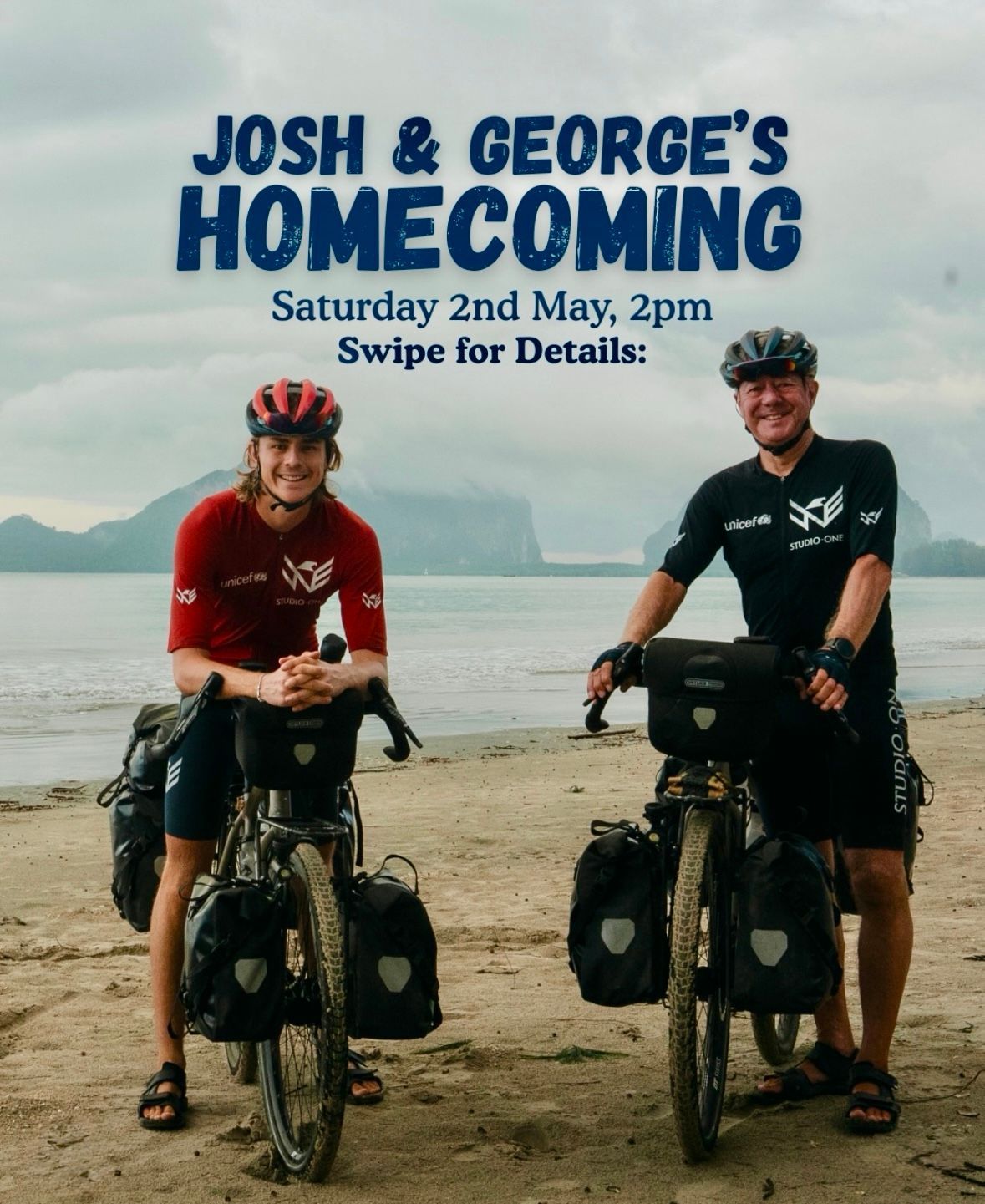
Toby will be at Norwich School with the Royal Geographical Society to talk about his filming adventures from around the world.
By Eleanor Lewis March 31, 2026
On Thursday 26 March, the U18 Boys played in the 1 st round of the national Tennis competition, The Glanville Cup, vs Wymondham College. Two very evenly matched teams saw some very close fought games with two of the singles games going to additional tie-break sets, leaving the score after the singles rounds tied on 4 points to each school. Our number one pair Harry Philpott and Charlie George Snelling played some exception tennis and managed to win their games 6-4, 6-4. Our second pair won their first set comfortably but then Wymondham College fought back and took their game to a tie-break set; Charlie Hutchinson and Veron Hung persevered as the light and temperature dropped and won the game to see Norwich School win 8-4 overall and through to the next round. Well done boys!
By Eleanor Lewis March 27, 2026
On Thursday 27 March, we were delighted to welcome 58 pupils and their 5 teachers from Collège Sainte‑Marie in Meaux, France. After spending a week exploring Norfolk, the group arrived at Norwich School, where our pupils were eager to meet them and proudly show them around. Our penpal exchange with Collège Sainte‑Marie has been running for a couple of years now, with Lower 4 pupils regularly writing and receiving letters in French. This visit was particularly special: the French group were Year 8 pupils, and many had the chance to meet their penpals from last year face‑to‑face for the very first time — a real highlight for everyone involved. The afternoon began with the NS U6 French group leading guided tours around the school, giving our visitors a warm and friendly introduction to life at Norwich School. This was followed by a lively treasure hunt in mixed teams of French pupils and NS Upper 4 pupils, all competing for an Easter prize. With clues written in both French and English, teamwork was essential — and it was wonderful to see pupils switching languages, helping one another, and having fun along the way. It was a joyful afternoon filled with laughter, curiosity, and excellent company. We very much hope to welcome pupils from Meaux again in the years to come — and perhaps one day, we’ll have the chance to visit them on their home turf too.
By Eleanor Lewis March 27, 2026
From 8-10 April a new art exhibition will be shown at the Crypt Gallery from We Are Nature. Wednesday 8 April, 11:00 - 16:00 Thursday 9 April 11:00 - 16:00 Friday 10 April 14:00 - 16:00
By Eleanor Lewis March 27, 2026
After half term, the Cross-Country team enjoyed a drizzly afternoon of racing in Ipswich on Saturday 28 February. The course was extremely muddy making for challenging, slippery conditions. But the Junior Boys managed to stay upright and perform well with Jonas Tam finishing 3rd, Jonty Croskell in 4th and Oscar Parker-Wright in 11th. All season the Senior Girls have dominated the front end of the field and again we had 3 of the top six finishers. On this occasion, it was Amelie Ivie who timed her finish best to take 3rd place ahead of Bea Green in 4th and Olivia Allen in 6th. The team was completed by Simran Chawla coming in 12th. With 8 Senior Boys running, the team prize seems sewn up this year and we had 3 of the top 5 finishers. Over the 7.6km route, Ethan Buskell was fastest on the day, coming 2nd, just ahead of Arthur Dannatt in 3rd and Leon Liu 5th. Leo Pitt was 8th, Jeremy Lo 9th and Tom Copley, George Yiasimi and Edward Lott completed the dominating team performance all in the top 14. Next, on Saturday 7 March we saw the final race in the East Anglian League against runners from Gresham’s, Ipswich and RHS. The team travelled to RHS and the conditions were reasonably dry and still on a flat, fast course. Our only competing Junior, Jonas Tam, improved upon last week’s third place to come 2nd this week, while in the Intermediate Boys, Kit Rudling came 4th. In the Senior Boys we had excellent strength in depth, as we have had all season, with eight runners competing. First to finish was Ethan Buskell who came 2nd overall. Jeremy Lo came through the field strongly to take 5th place, capping off another consistent season. Leon Liu, Kort Tsui and Leo Pitt were next over the line, followed shortly by Tom Copley, Edward Lott and George Yiasimi. The Senior Boys, having showed such consistent quality and excellent camaraderie throughout the season, deservedly took home the East Anglian League Team Trophy.  Finally, 5 of our athletes represented the school at the English Schools National Finals in Liverpool — a fantastic experience with some excellent performances across the board. Well done to everyone who has represented the Cross Country team this season.
By Eleanor Lewis March 27, 2026
The body content of your post goes here. To edit this text, click on it and delete this default text and start typing your own or paste your own from a different source.
By Eleanor Lewis March 27, 2026
U18s This half term saw the U18s compete in both the Norfolk County Cup and the Rosslyn Park 7s. Following a valuable learning experience in the County Cup, the squad travelled to Rosslyn Park on 22nd March to compete in the Vase Competition the following day. The boys delivered their strongest performances of the term, securing impressive victories over Monkton Combe and Newcastle-Under-Lyme School. A narrow defeat to Dartford Grammar School, however, meant they were just short of qualifying for Day 2. Standout performances came from Casper Foden, Tom Ratledge, and Alex Sisson. U15s The U15s took part in the Northampton Saints 7s, hosted at Cambridge Rugby Club. They produced an excellent set of performances in the group stages, recording notable wins against Oundle School and Bedford Modern School. These results saw them progress to the Cup semi-finals, where they were narrowly defeated by a strong Samuel Whitbread Academy side. Overall, the team finished among the top performers in a highly competitive field featuring leading schools from across the Midlands and London. Standout performances were delivered by Ben Lowe and Toby Young. U14s This term has seen significant development from the U14s, who have worked consistently hard to improve both individually and as a team. Rosslyn Park provided a particularly positive experience, with clear progress evident throughout the squad. Sam Trickey and Biden Barton were standout performers. U13s and U12s Both the U13s and U12s competed in the Norfolk County Cups, hosted at Redmayne, and performed exceptionally well. Impressively, both teams went undefeated in their respective competitions. A special mention goes to Ben Guo, who played across both age groups, stepping up to represent the U13s and delivering standout performances against older opposition.
By Eleanor Lewis March 27, 2026
The Rowers have had a busy half term, with racing at Norwich Head, Hammersmith Head, Eastern Region JIRR Trials, Schools Head, GB U19 Spring Assessments and The Scullery Head. All year groups raced at Norwich Head, with wins for the 1st VIII as fastest crew of the day, Boys J14 4x+ and Girls J18 2x. At the Eastern Junior Inter-Regional Trials we had 8 of our 13 crews reach the Final, with the Girls J18 2- and Boys J14 2x achieving 2nd place. The highlight of the winter Head racing is the Schools Head of the River and The Scullery Head. The Boys 1st VIII were 15th Championship crew and the Girls 1st 4x- were 16th Championship crew. The J15 Boys and Girls VIII raced the Tideway for the first time.  At The Scullery Head, the Boys 1st 4x- were a fantastic 4th place, with the 2nd 4x- placing well too. The Girls 2nd Quad were 11th in WJ17 4x-. The J14 Boys and Girls Octos were 15th and 16th respectively- both inside the top half of a strong draw. Our three GB U19 trialists continued their selection campaign at the Spring Assessments, taking part in three days of racing in Pairs and Fours. James Howard and Ellie Thwaites produced strong performances to position themselves well in the rankings, while Nicholas Conway impressed with a 2nd-place finish.
More Posts