Head's Start of Michaelmas Term Address 2022

September 5, 2022

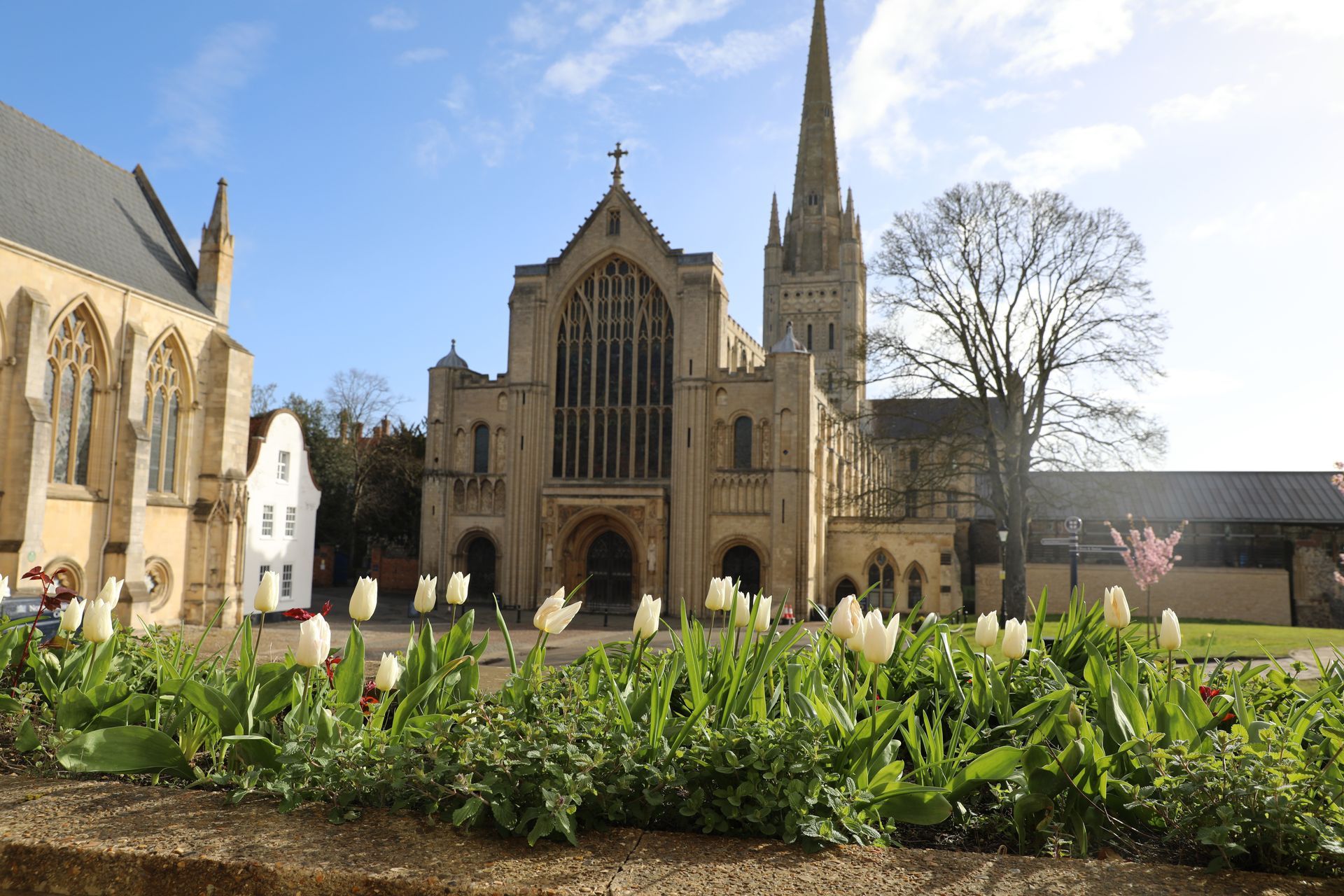
As pupils return to school after a long, hot summer, the Head addressed the school community in the Cathedral on the first day of Michaelmas Term. You can read his Address below:

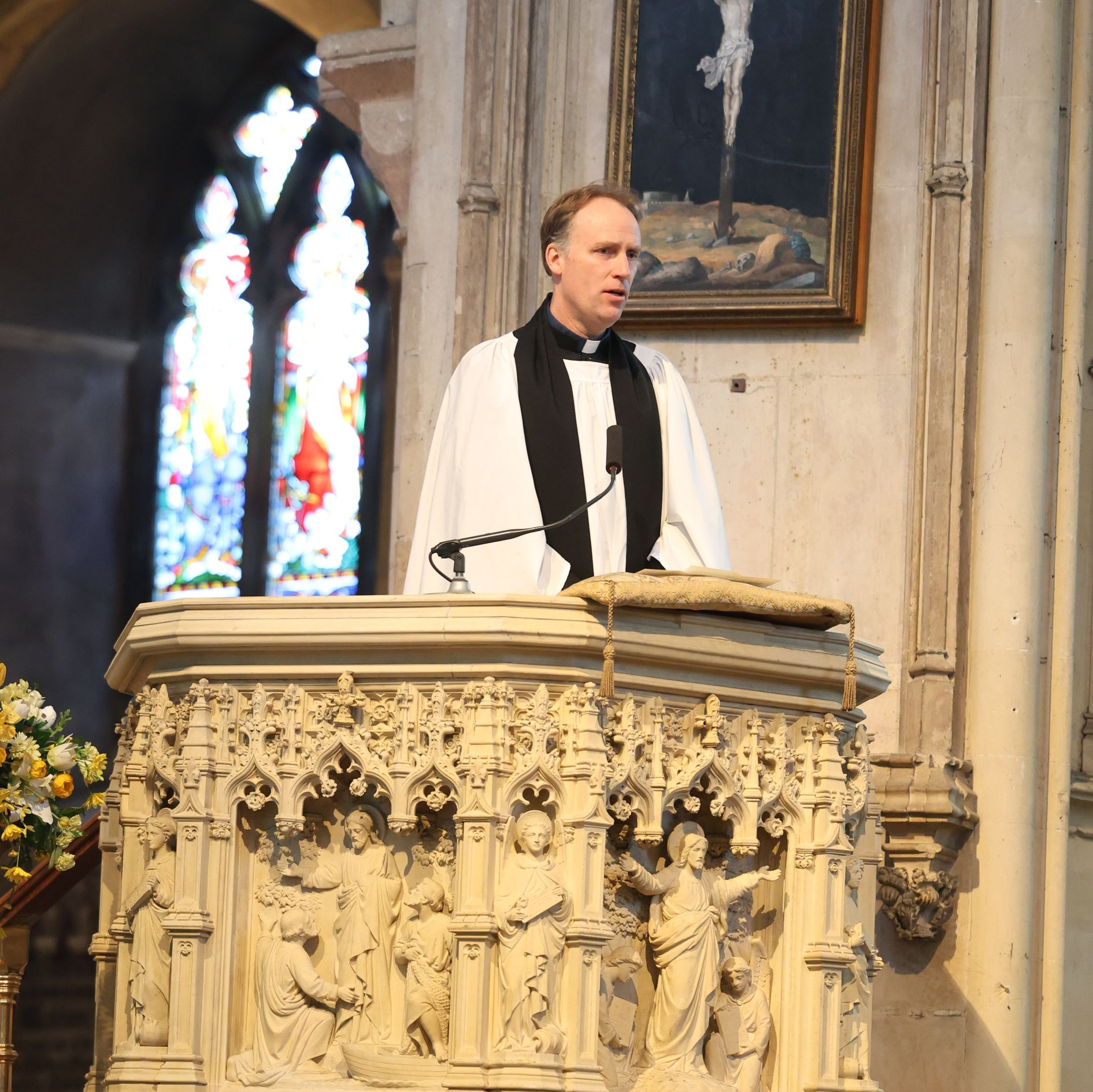
"Welcome or welcome back to the Cathedral at the start of this school year. Whether the building is familiar or new, there is always something of the phrase “shock and awe” when you come in; indeed, I remember one new pupil last year describing this first service as making the school feel like Hogwarts. I understand that reaction but I hope it will not feel long before you all feel that it is your building. Impressive as it is, there is also warmth here and I believe its longevity is reassuring, too; I trust you will find it supportive of your personal journey.


You will be expecting me to offer advice at this start of year service. In terms of behaviour, I am not sure I can beat the words of St Paul to the Colossians from today’s reading:

“clothe yourselves with compassion, kindness, humility, gentleness and patience. Bear with each other and forgive one another if any of you has a grievance against someone… And over all these virtues put on love, which binds them all together in perfect unity.”

The overlap with our stated values of love, inclusion and compassion is uncanny, while the encouragement to be forgiving is always sensible for a community of nearly 1000 teenagers and over 200 adults coming together both at school and online.


My advice at the start of the year will therefore come from a rather different starting point: I enjoy the start of the school year and the sense of expectation and excitement that the community brings when it joins together. We do this not knowing quite where our journey will end; there is a gap between our plans now and the outcomes later on. You will have an idea of what you want to achieve, whether in your favourite subject or a new club or consolidating friendships. Yet you cannot know how these plans will turn out by the end of the year. My suggestion this morning is to enjoy experimenting along the journey and be open to new turnings.


My interest in this topic came from a book I read over the summer, called “How we got to now” by Steven Johnson, a study of how key inventions have shaped the modern world, often in unexpected ways.

One might think this is like the well-known phenomenon of the butterfly effect, where very small changes can have much bigger consequences, which started with the work of mathematician and meteorologist, Edward Norton Lorenz, who proposed in the 1970s the concept that the flap of a butterfly’s wings creates air movement which weeks later gives rise to huge weather systems such as a tornado.

However, Johnson seeks something with a closer connection to reflect networks of inventions in a particular field and suggests instead the hummingbird effect. To explain this, we need to go to environmental biology. I am no scientist so please stay with me.


In the evolution of pollination, flowers developed colour, scent and nectar to attract pollinators, while pollinators developed equipment to be drawn to the flowers in order to extract pollen and fertilize other flowers. Both flowers and insects therefore developed to fit increasingly well together.

Into this scene we put our hummingbird. Not blessed with the flexibility of an insect’s invertebrate anatomy, the hummingbird developed an unusual form of flight dynamics (to be specific: rotating wings with power to downstroke as well as upstroke) to allow hovering in order to access the nectar of flowers. The evolutionary design of hummingbird wings therefore comes directly from the reproduction strategies of plants.


More generally, then, the hummingbird effect describes a close causal link between two seemingly distant events; the right circumstances are created for particular, often radical, developments in a seemingly unrelated field.

With this model established, Johnson then looks at key areas of human development in history, including time, sound, temperature and hygiene. Another example is glass. While glassmaking dates back more than 6000 years, experiments particularly developed at the start of the second millennium CE in colour (see the stained-glass windows around you) and transparency. The invention of the printing press in the 1430s led to an explosion in the manufacture of spectacles because of glass’ ability also to alter progression of light through it and man’s consequent understanding of refraction and magnification. Many new readers suddenly realized that they were long-sighted! The development of the lens, in turn, led to telescopes and astronomy on the one hand, with microscopes and cellular investigation on the other hand; both also benefitted from glass’ importance in the development of photographs and mirrors, which led to radical changes in ideas around self-perception. Another quality of glass to be explored was its resilience, which takes us to fibreglass in manufacturing and that most modern of phenomena, the fibre optics which power the internet.


It is safe to say that modern life would not be what it is without these developments in glass and Johnson cites the hummingbird effect to explain how many of these technological developments built incrementally from one another. The Venetian glassmakers of the early Renaissance were not trying to discover planets, investigate microbes or invent the internet, but their experimentation created conditions to make such developments possible.


In each area, Johnson is keen to show that innovation is often collaborative and iterative; i.e. developments are built up by communities and in steps, many of which seem haphazard at the time but join up when viewed in hindsight. He therefore challenges the traditional concept of lightbulb moments for inventions: that single genius with a moment of inspiration, also captured by the Eureka exclamation supposedly made famous by Archimedes.

I think this is helpful for us all at the start of this school year. It is exciting to be positive in starting something without quite knowing where it might end up, to reach out to others interested in similar things to see what might emerge from discussion and group work, to be unafraid to try something new or adopt a new approach, to change direction as one’s interests and knowledge develop.


To make his point, Johnson takes the invention of the lightbulb itself, Thomas Edison’s creation which is synonymous with quasi-divine inspiration. In fact, others had been experimenting with artificial light using a glowing filament from an electric current in a vacuum for 80 years before Edison. Edison’s technical contribution included the introduction of a bamboo filament, but his success came as much from expert marketing in the press and the assembling of an excellent team of collaborators. Johnson even compares Edison’s lightbulb with Apple products: they were not necessarily first but they were first to get mass market traction.


My main point this morning is to invite you to reflect that much in human technological development did not come from a single moment of inspiration from a genius individual. The hummingbird effect suggests instead that progress has often come from groups working together and that progress in one area might lead to an exciting, unexpected discovery elsewhere.


This for me is an exciting message and I encourage you to be ambitious, positive and resilient for yourself and others, but also to be innovative, flexible and open-minded as your experiences and interests develop. With good intentions and thorough processes, your actions can and will lead to good things, even if they end up being different from your initial aims.

Welcome back and I wish you all well for an excellent year!"

By Eleanor Lewis January 22, 2026
Our A Level Spanish pupils enjoyed an inspiring study day in London focused on the iconic Spanish filmmaker Pedro Almodóvar , a key part of their Paper 2 syllabus. The day offered pupils the opportunity to deepen their understanding of his work through expert-led sessions and engaging discussions with university professors and fellow Spanish students from other schools. Beyond the classroom, they also embraced the cultural side of Spain by sharing a well-deserved tapas dinner , bringing their learning to life through food, conversation and authentic cultural experiences.
By Eleanor Lewis January 21, 2026
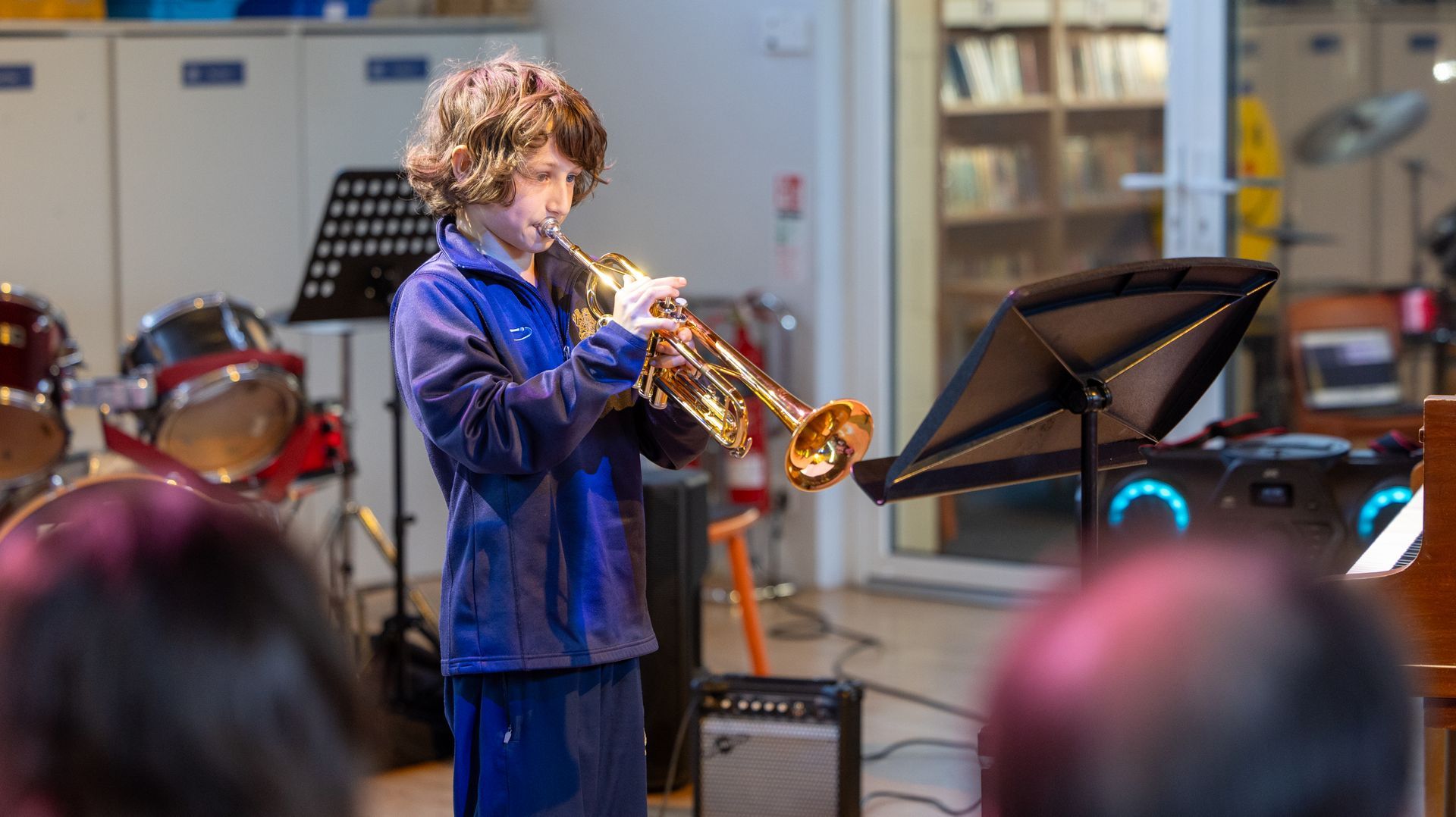
The Lower 3 Informal Concert in the Lower School Hall was a thoroughly enjoyable afternoon, celebrating the confidence, musicality and growing skills of our young musicians. The relaxed atmosphere created the perfect setting for pupils to share their hard work and enjoy performing for friends, family and staff. A nice variety of instruments and vocals provided some excellent contrast to the programme including Trumpets' Flutes' Drums, Piano, Guitar, French Horn and Vocals. The music on show was also well chosen including Elegy for the Arctic by Ludovico Einaudi , Naughty by Tim Minchin , Bolero by Ravel, Always With Me from Spirited Away and Breakfast in America by Supertramp on the drums. The concert was a wonderful reminder of the enthusiasm and dedication of our Lower 3 musicians. Every performance was warmly received, and the afternoon was filled with encouragement, applause and pride.  Well done to all involved for a fantastic concert.
By Eleanor Lewis January 22, 2026
We were delighted to welcome on site the Norfolk Contemporary Art Society (n-cas) on 21 January 2026 for a stunning public lecture, their first talk of the calendar year in our Blake Studio. This visually arresting lecture was given by celebrated German artist Lothar Götz entitled: Colour – Space – Light – Spirit Götz has an international reputation and has exhibited all over the world, showcasing his incredibly distinctive and eye-catching style. He is also Associate Professor of Fine Art at the University of Sunderland. He uses colour in a unique way to create visually arresting public art often on a simply monumental scale, principally using his trademark precise geometric forms. He almost overwhelms his viewers with a riot of colour and shape. His unusual “canvases” for both inside and outside art installations have included underground stations (most recently the Elizabeth Line), huge walls, church chairs, ballrooms, staircases, warehouses, atria to public buildings, flags and have even included the outside of whole buildings, most notably the Towner Art Gallery Eastbourne (which has become a tourist attraction in its own right). An audience of n-cas members, local creative artists and students, parents, staff and alumni were entertained by an astonishing slide show of his mesmerising works, and all enjoyed meeting him over refreshments afterwards. Our nest lecture in the Blake Studio promises to be a real cracker. ON Barney Broom will speak about the wonders of the silver screen in the inaugural Friends of Norwich School sponsored talk on the world of film. Barney is a Member of BAFTA as well as an accomplished film director, screenwriter and published novelist, but first and foremost he is a compelling storyteller, one who lives and breathes his material. This promises to be an entertaining evening for all ages and interests. All are welcome. Tickets on sale: HERE . Finally, we have recently launched our full programme of exciting and cultural events organised by Norwich School taking place in and around Cathedral Close this term. There really is something for everyone to brighten up these dark winter months. Do have a flick through At Close Quarters Lent Term 2026 . Booking for many of the school events can be found on our homepage under “Upcoming Events”: www.norwich-school.org.uk
By Eleanor Lewis January 19, 2026
Lower Two had a fantastic Egyptian Day on Monday 19th January. The children learned about the importance of black kohl eye make-up in ancient Egypt, explored why mummification was so significant, and discovered how hieroglyphs were used to communicate stories and messages. One of the highlights of the day was reenacting an Egyptian burial, which really brought their learning to life. Everyone looked amazing in their Egyptian costumes, and the children had the best day immersing themselves in ancient Egyptian history.
By Eleanor Lewis January 19, 2026
Lent Term Informal concerts kicked off in style showcasing talent with a wide mix of instruments, styles, and moods that kept the audience engaged from start to finish. Each performer brought something different to the programme, making the afternoon feel varied, exciting, and full of personality. Music included Cinarosa's Sonata in G for Piano, Gossec's fun Gavotte on the Cello and a hoe down on the Violin followed by a beautiful rendition of The Skye Boat song on the Harp. A touch of Rock n Roll on the electric guitar with Been There by A Lambert and rounded off with a gentle interpretation of Chopin's Waltz in A Minor .  Overall, the concert was a great success and highlighted the hard work and musical ability of all the performers. It was an enjoyable and memorable event that showed the impressive range of talent within the school.
By Sonja Mitchell January 19, 2026
Selected for Penguin's Random House programme for emerging talent, 'Blank Canvas' is already out in book shops.
By Eleanor Lewis January 18, 2026
On 18 January, the 32nd Norfolk Young Musician Competition took place showcasing an array of young talent across a variety of musical disciplines. Founded in 1993 by Music at St George’s (later the Norfolk Youth Music Trust), the competition offers a variety of prestigious prizes, including the Michael Badminton String Prize, Mrs E. Sturgeon Piano Prize and Jane Roberson Prize. Promoted by the Michael Badminton Young Musicians Trust, this year’s adjudicator was Martin Outram, Lionel Tertis Professor of Viola at the Royal Academy of Music, who was supported by Jonathan Wortley, Chairman of the Michael Badminton Young Musicians Trust. This year, of the 18 competitors, ten were current or former pupils of Norwich, with another participant who will be joining the Sixth Form as a Music Scholar in September 2026 - something we are immensely proud of. Each competitor, who is required to have gained Grade 8 with Merit (or higher), is invited to play a 15-minute programme in front of an audience. Of the 18 competitors this year, 3 of our performers received honourable awards for their performances. Min Ying Deng (M5) was awarded 2nd overall prize for her renditions of Prelude in C# minor Op.3 No. 2, Trois Etudes de Concert ‘Un Sospiro’ in Db major and Fantasie-Impromptu in C# minor. Isaac Schaad (M5) received the Michael Badminton String Prize for Most Promising Young String Player for the third consecutive year, for his performances of Adagio in E major KV 261 and Zigeunerweisen by Sarasate and Ben Griffiths (U6) was awarded the Jane Roberson Prize for voice, performing Aufenhalt by Schubert, Caro mio ben by Giordani, Clair de Lune by Faure, Silent Noon by Vaughan Williams and Oliver Cromwell by Britten. Other notable performances came from pupils as young as Jessic Li on the piano and Jacey Ng on the euphonium, who are both in Middle 5; Upper 6 pupil Caio Boyero on the cello; and ONs Finnian Smith on the French horn and Colette Maxwell-Preston on the cello. Congratulations to all that participated! The competition proved to be a memorable celebration of commitment, musicianship and talent, and the high standard of performances across all disciplines reflected the centre of excellence that is the Norwich School Music Department.
By Sonja Mitchell January 16, 2026
An upgrade to sound quality is music to our ears!
By Eleanor Lewis January 16, 2026
Good morning everyone. Last year my Dad turned 80. When we asked him if there was anything he’d like to do to celebrate, he said he wanted to tour the WW1 battlefields in France and Belgium. So during the May half-term I went over there with my brother and our parents and we spent a week exploring Flanders and the Somme region, as I know many of you have done on school trips. At the end of the week I dropped the others at Charles de Gaulle airport for their early morning flight home, and treated myself to a day of birdwatching near Calais before catching the ferry to Dover. I spent a delightful day at the coast, enjoying turtle doves and nightingales and my first ever Marsh Warbler, which I was very excited about. Species number 626 on my life list, in case you are wondering. I also stumbled across an information board that caught my eye. It was in French so I couldn’t entirely understand it, but it had pictures, and seemed to be about a pilot from the WW1 era. What caught my eye was the fact that the pilot appeared to be black and female. A week of touring the battlefields and learning about the war had taught me that all pilots in those very early days of flight were white and male. I jotted down the name Bessie Colman in my notebook, and told myself that I would do some research when I got home. And I’m glad I did. Bessie Colman’s story is quite remarkable, and I’m grateful to Rev Child for the chance to share it with you now. Her story is one of achieving a dream in the face of racist and sexist discrimination. I hope that in our more enlightened times none of you will suffer similar discrimination, but there will almost certainly be situations where you are denied the chance to do what you want, possibly just because someone else gets chosen ahead of you. You might not have got picked for the A team for tomorrow’s match, or get the role you want in the musical, or be selected to be a prefect, or get into the university of your choice. If that does happen to you, hopefully this story will encourage you not to give up. To set the scene, the Wright brothers flew their famous first flight in the year 1903. Young Bessie Colman was 11 years old at that time, growing up in Texas, and like many young people of the day, she was captivated by the idea of flight, and dreamt of getting the chance to fly herself. One of her brothers served with the army in WW1 and got to witness some of the first ever aerial combat action, taking place over his head as he dug and repaired trenches. When he returned home, he told his sister about these airborne daredevils, and she decided that was definitely what she wanted to do. The trouble was that Colman was not only female and black, she was also of native American descent. In those days, any one of these things made it impossible to get a pilot’s licence in America. She was also poor, which was another significant barrier. Colman was determined to fly planes, and while her race and gender made this impossible in America, she knew from what her brother told her that things were different in France. However, getting the money to travel across the Atlantic, and pay for flying lessons when she got there, proved an almost insurmountable hurdle. Education and employment opportunities for black women were limited in those days. Colman left her home in Texas and joined her brother in Chicago, got qualified as a beautician and started to earn money as a manicurist. She also knew there would be a language barrier in France. Unlike these days, she couldn’t rely on everyone speaking English, so she took French lessons in the evenings. After 2 years, she had earned enough money, and learned enough French, to start her adventure. She sailed for France on 20th November 1920 and enrolled at a flight school near Calais. During her 10 months of training, she learnt the basics, and soon moved on to advanced aerobatics. This was still in the early days of flight, when mechanical failure and crashes were all too common. One of Colman’s fellow students was killed before the completing the course, but Colman was undeterred and passed with flying colours. When she got her licence from the Federation Aeronautique Internationale, she became the first American of any race or gender to be awarded these credentials. Once qualified, she embarked on a career as a stunt pilot, performing barrel rolls and loop the loops at airshows across Europe and America. She became something of a celebrity, flying under the name “Queen Bess, Daredevil Aviatrix”. She survived a crash in which she sustained a broken leg and ribs, but bounced back, and added parachute jumps to her shows, walking along the wing of a plane at 3000 feet before jumping off and landing safely in the arena. While all her dreams were coming true, Colman was aware that she was something of a trailblazer for black women, and was determined not to forget her roots, or be taken advantage of. In 1922 she signed a contract to be the star of a Hollywood movie, but shortly after filming started, she walked off the set, as her role reinforced all the negative stereotypes of black people at the time. Colman also took a stand against various forms of racial discrimination. At many of the airshows she performed at, there had been separate entrances for black and white people, and in some cases black people were not permitted to attend at all. Colman refused to perform at any such venue, and forced organisers to change their policies. One of her ambitions was to open a flight school specifically for African Americans, but sadly she didn’t live to see this happen as she died in a crash in 1926, while practising for an airshow in Florida. She died young, aged 34, but she died doing what she loved. And while she may not have opened her flight school during her lifetime, she had succeeded in breaking barriers and inspired other women and black americans to follow in her footsteps. When in 1992, Mae Jamieson became the first African American women in space, she took with her a photo of Bessie Colman. If Bessie Colman told her friends in Texas that she wanted to be a pilot, they would probably have laughed at her. That simply isn’t possible, they would have said. Don’t waste your time. You are a woman. You are black. You are poor. The chances of you getting to be a pilot are 1000000 to 1. This morning’s reading is a Psalm written by King David when it seemed that the whole world was against him. His own son was trying to depose him and he called out to God for help. “You Lord are a shield around me, and the one who lifts my head high…I will not fear though tens of thousands assail me on every side”. It is words like these that give me strength when things aren’t going well and I feel like the world is against me. I don’t just imagine that I can just sit on my backside and wait for God sort everything out for me. But it gives me hope that if we can follow the example of someone like Bessie Colman, explore every possible avenue, work hard and never give up, there is no reason why we can’t achieve our dreams.
By Sonja Mitchell January 15, 2026
You are invited to attend Barney’s unique talk exploring the captivating world of film
More Posts